
The Need :
Water availability in the bore wells is one of the major concerns for farmers for irrigating their crops. Improper estimation or lack of accurate assessment about water availability and longevity while digging a bore well results in loss of essential time and money.
Current methods for detecting depth and water levels in bore wells are very crude and unscientific in nature.
There isn’t any available solution to measure the exactly predicting the probability of getting water after installing the motor pumps. Bore well scanners available but are too expensive and not easily available.
Our Solution :
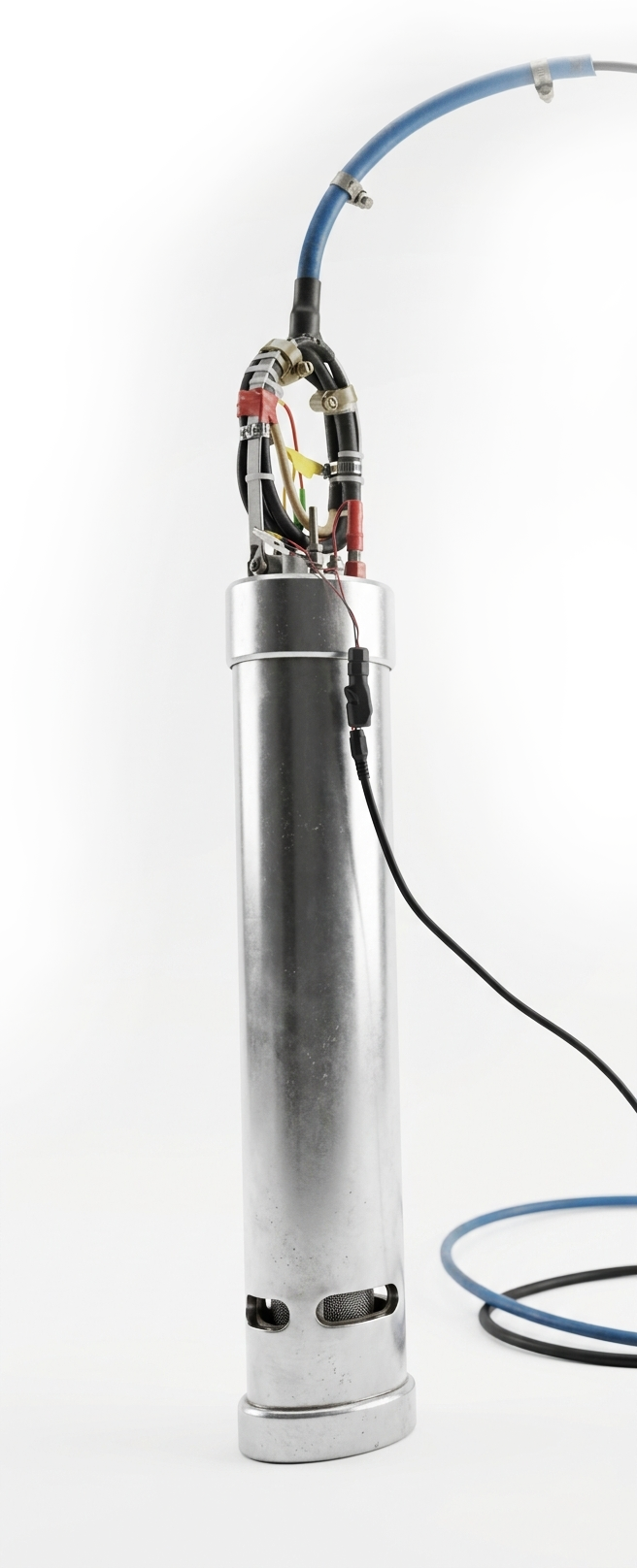
Our offering is customized solution consisting of bore well scanner and data collection system that is low cost consisting of an automated capsule shaped bore scanning device, which detects the ground water availability, as well as integrated sensors that detects its water pressure and temperature.
Additionally, the system also measures the inflow / outflow rate and direction of ground water.
Benefits
Generates a report which analyses the availability of water in the bore well which helps farmer make informed decision about installing motor pumps.
It is also used to ascertain the depth, inflow and outflow of water, kind of water source and the bore well formation.